
Most economists feel the RBI has room for a 25-basis point cut, having met inflation targets comfortably

Over 40 people are still missing after a series of cloudbursts occurred in Kullu's Nirmand, Sainj and Malana, Mandi's Padhar and Shimla's Rampur subdivision on the night of July 31 and wreaked havoc.

A tiny dead snake was allegedly found in a packet distributed under the mid-day meal scheme meant for children aged between six months and three years at an anganwadi or a government-run nursery school in western Maharashtra's Sangli district, prompting the authorities to launch a probe.

A heavy agenda including the ordinance on the Food Security Bill awaits the Monsoon session of Parliament beginning on Monday amid expectations that the short sitting will be more businesslike and smooth as compared to the din and dust in the last few sessions.

'Investors can consider staying invested in long duration products as there is a possibility of rate cuts in the near term.' Positive macros - lower inflation, high forex reserves and favourable demand-supply dynamics for government bonds - make a strong case for rate cuts from December, says Devang Shah, head of fixed income, Axis Mutual Fund. In an interview with Abhishek Kumar in Mumbai, Shah says this view may not hold true if commodity prices go up sharply.

The Reserve Bank of India's (RBI's) caution on inflation, highlighted during the recent monetary policy meeting, may put investors' faith in fast moving consumer goods (FMCG) stocks to test, analysts said. They, however, believe FMCG stocks may ride through this near-term investor anxiety as related companies are, typically, well-equipped to handle inflation due to their pricing power and steady demand for essential goods.

Don't let the monsoon showers affect your hygiene. Follow these precautions to stay healthy.

'Rava roasted in shudh desi ghee, garnished with saffron and cardamom, sweetened with sugar or jaggery is heaven on a plate' says Taruna.
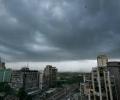
There are chances of taps running dry and prices of fruits and vegetables spiking.

The wholesale inflation rose to a 13-month high of 1.26 per cent in April fuelled by rising prices of food articles, especially vegetables, amid expectations of RBI holding interest rates in the policy review next month. The wholesale price index (WPI) based inflation has been rising for two months in a row.

Moody's Ratings on Tuesday said India's growing water shortage can disrupt farm and industry sectors and is detrimental to the credit health of the sovereign as rising food inflation and decline in income may spark social unrest. It said decreases in water supply can disrupt agricultural production and industrial operations, resulting in inflation in food prices and hence can be detrimental to credit health of sectors that heavily consume water, such as coal power generators and steel-makers.

A list of lesser-travelled destinations in India that you must explore this year!

Monsoons have had limited effect on market returns for a given year, report Sachin Mampatta and Sundar Sethuraman.

Retail inflation declined to a three-month low of 5.1 per cent in January, mainly due to subdued prices of vegetables, fruits and other food items, according to government data released on Monday. The fall indicates that retail inflation is inching towards the Reserve Bank's comfort level of 4 per cent. The Consumer Price Index (CPI) based inflation was on the rise for two straight months after touching a trough of 4.9 per cent in October 2023. In December, it stood at 5.69 per cent.


Chef Vijesh Modi from The Deltin, Daman shares his special monsoon recipe.

Union Minister and Lok Janshakti Party-Ram Vilas leader Chirag Paswan is planning to convene a meeting of Scheduled Caste MPs of different parties as he works to mobilise support ahead of his party filing a review plea in the Supreme Court against its judgment allowing sub-categorisation of reservation within the community.

The government on Wednesday raised the minimum support price (MSP) for paddy by 5.35 per cent to Rs 2,300 per quintal for the 2024-25 kharif marketing season. The hike in paddy support price comes despite the government sitting on surplus rice stocks, but it is significant ahead of elections in states like Haryana, Maharashtra, Jharkhand, and Delhi.

Reserve Bank of India (RBI) is unlikely to cut the benchmark interest rate at its upcoming monetary policy review meeting, taking place soon after the announcement of the Lok Sabha election results, amid inflation challenges, said experts. The Monetary Policy Committee (MPC) may also refrain from rate cut as economic growth is picking up, notwithstanding the elevated interest rate of 6.5 per cent (repo) prevailing since February 2023. The meeting of the Reserve Bank Governor Shaktikanta Das headed MPC is scheduled for June 5 to 7.

The RBI said recently that the upsurge in inflation in April was led by food and commodity prices.

Skymet said the monsoon this year could be 100 per cent of the long period average (LPA) with a model error of plus and minus 5 per cent.
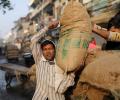
Against the Reserve Bank of India's (RBI's) projection of 7.1 per cent, India's first quarter (Q1) 2024-25 (FY25) gross domestic product (GDP) growth came in at 6.7 per cent. This is in line with market expectations and significantly lower than the 7.8 per cent recorded in the fourth quarter (Q4) 2023-24 (FY24) and 8.2 per cent in Q1FY24. The quarter witnessed decreased government consumption and investment spending due to the parliamentary election.

What stocks will gain from a normal monsoon?

The Reserve Bank of India (RBI) has identified "climate shocks" as a risk to food inflation rates and overall price rise while stating that the outlook for the country's economic growth remains bright. In its Annual Report for 2023-24, released on Thursday, the central bank said easing supply-chain pressures, broad-based softening in core inflation, and early indications of an above-normal southwest monsoon meant well for the inflation outlook in 2024-25. "The increasing incidence of climate shocks, however, imparts considerable uncertainty to the food inflation and overall inflation outlook," said the RBI while noting headline inflation moderated by 1.3 percentage points on an annual average basis to 5.4 per cent in 2023-24.

The Reserve Bank is unlikely to cut the benchmark interest rate in its forthcoming bi-monthly monetary policy review later in the week as retail inflation is still a cause of concern, and there is a possibility of the Middle East crisis deteriorating further, impacting crude oil and commodity prices, say experts.
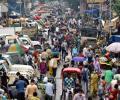
The Reserve Bank on Friday retained inflation projection at 4.5 per cent for the current financial year, lower than 5.4 per cent in the last fiscal. Assuming a normal monsoon this year, CPI (consumer price index-based) inflation for the current year is projected at 4.5 per cent, with Q1 at 4.9 per cent, Q2 at 3.8 per cent, Q3 at 4.6 per cent, and Q4 at 4.5 per cent.

A below-normal monsoon is likely to drag down the food output with India's agricultural GDP growth likely to slump to 0.8 pc in the current fiscal, says a report by the Japanese brokerage firm Nomura.

Less-than-expected rainfall and a poor spatial distribution, experts say, can rekindle fears of a rise in food and fuel inflation that can have an impact on the RBI's monetary policy. The fear of less than optimal rainfall due to El Nino this year, analysts believe, is the biggest short-term risk for the markets, which they said has not been fully priced in yet by them. Monsoon set over Kerala on June 08, a week later than its scheduled date.

'Our target will come from rural areas as there are more outlets there.'

The IMD dispelled fears by forecasting a normal monsoon for June-September. Rainfall is expected to be 98 per cent of the long period average, significantly higher compared to last year's 77 per cent LPA.

'The present generation, either due to historical amnesia or political propaganda, has been fed a narrative that paints India as an adversary rather than an ally.'

A rainy day recipe to keep you warm and cosy.

The actor has many reasons to fall in love with the rains.

The day-long conference will be chaired by Finance Minister Arun Jaitely and presided over by both Food Minister Ram Vilas Paswan and Agriculture Minister Radha Mohan Singh.

The government on Saturday dismissed suggestions that the Monsoon session will be the last session and that the country was headed for early elections.

Also, the monsoon this year may end up being the driest since 2015, which recorded a rainfall deficit of 13 per cent, they said.

July and August are expected to receive 107 per cent and 104 per cent of rainfall

RBI watchers are going to be on tenterhooks for the next 3 weeks.

Adding greens to your dal transforms it into to the best companion for your rice.
Write in to us with instructions on how to prepare lip-smacking rainy-day foods and we'll publish your recipes right here on rediff.com.
